

Articles posted to the Groong News Index and Groong.org.
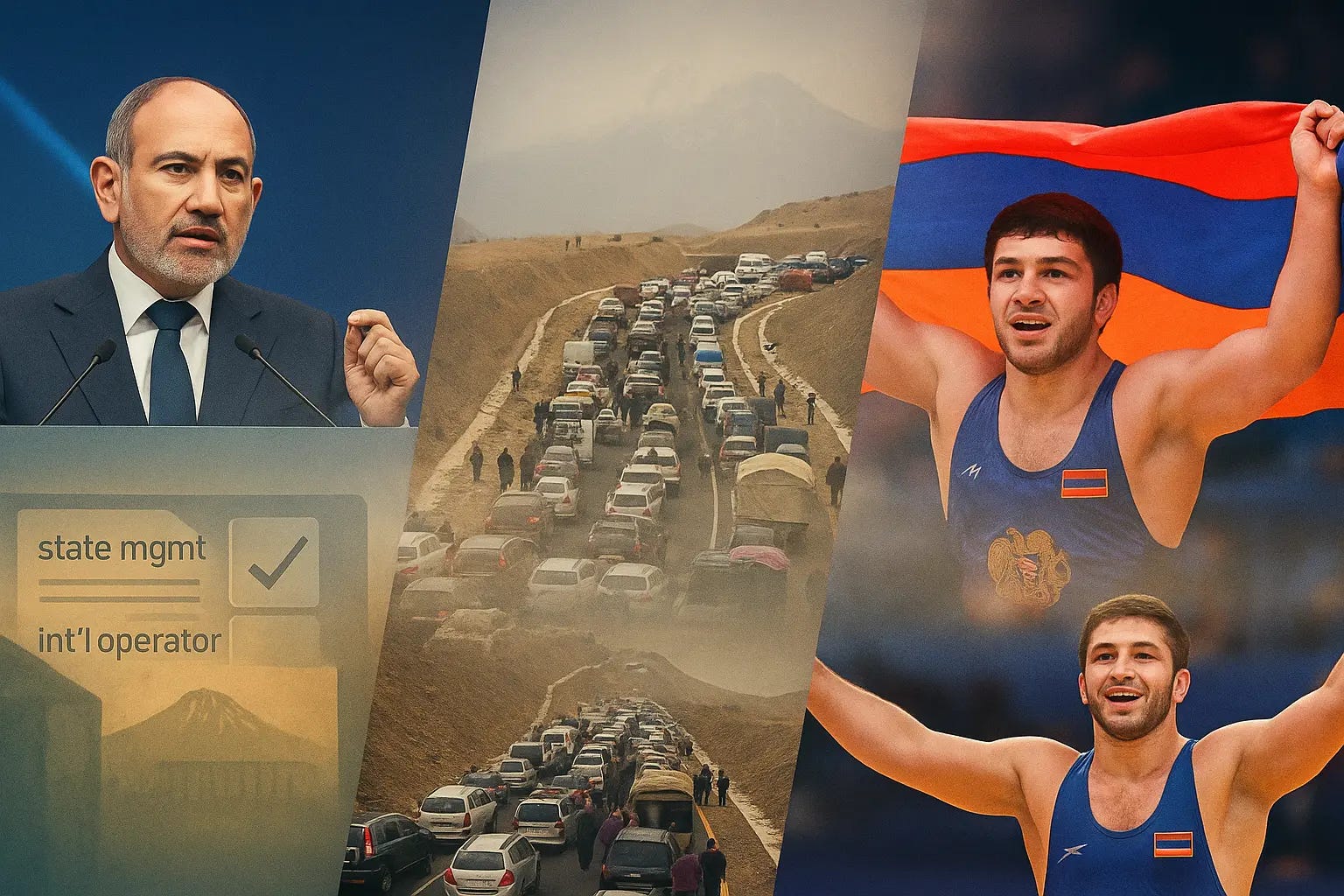
1) Haut-Karabakh : "Il n'y aura pas de paix durable si l’Europe ferme les yeux sur un crime contre l'humanité"
The op-ed argues there can be no durable peace if Europe overlooks forced displacement, cultural destruction, and alleged crimes against Armenians in Nagorno-Karabakh. It urges targeted sanctions, stronger monitoring, and legal action through international courts, paired with credible guarantees for safe and voluntary return. The author links accountability to reconciliation, warning that impunity entrenches exile and fuels radicalization. He calls for heritage protection, humanitarian access, and a European policy that centers rights over geopolitics. (marianne.net).
2) Sports: Hrachya Poghosyan wins bronze at the 2025 World Greco-Roman Wrestling Championships
Hrachya Poghosyan captured world bronze at 60 kg in Zagreb, prevailing on criteria over Georgii Tibilov after advancing through repechage. The result complements Malkhas Amoyan’s gold at 77 kg and highlights Armenia’s depth in Greco-Roman. Reports note Poghosyan’s strong par terre defense, match management in a low-scoring bout, and a dominant early technical win. Coaches frame the medal as momentum toward Olympic qualifying, emphasizing conditioning blocks, opponent scouting, and refinements to counterattacks and lift entries. (sportaran.com).
3) Sports: Armenia’s Futsal National Team Lost to Spain in the First Friendly Match
Armenia fell 2–6 to Spain in Pamplona in the first of two friendlies, with goals from Arsen Petrosov and Sargis Margaryan. Despite the scoreline, the staff treated the match as a rehearsal for pressing triggers, rotations, and set-piece variations against elite opposition. The report previews a September 21 rematch in Tudela and targets better compactness, faster coverage of the pivot, and cleaner transitions. The friendlies serve as benchmarks ahead of Euro 2026 qualifying and domestic talent integration. (sportaran.com).
4) Sports: Armenian Premier League Round 7 Kicks Off: Van’s Victory and Urartu’s Thrashing
Round 7 opened with contrasting scripts. Van overturned a halftime deficit to beat Shirak 3–2 through aggressive wing play and improved game management late on. Urartu thrashed Ararat 6–0, propelled by Bruno Michel’s four-goal performance and relentless central overloads. Analysts highlighted rising finishing quality, flexibility in shapes, and the league’s parity beneath the leaders. The results pushed Urartu to the summit on points and goal difference while underscoring tactical adjustments that punished defensive gaps. (sportaran.com).
5) Sports: Ararat-Armenia and Noah Draw with Three Red Cards
Ararat-Armenia and Noah drew 2–2 in a turbulent match featuring three red cards: Welton for Ararat-Armenia and both Marin Jakolis and Virgile Pinson for Noah. Nardin Mulahusejnovic scored a brace, with responses from Hugo Oliveira and Artur Serobyan. The final minutes were marked by time management and emergency defending. Coaches lamented lapses in discipline but praised resilience under pressure. The result keeps mid-table dynamics tight while disciplinary fallout could affect upcoming squad rotations and suspensions. (sportaran.com).
6) Sports: Armenia won an Olympic quota in pairs figure skating
Karina Akopova and Nikita Rakhmanin secured Armenia a Milan-Cortina 2026 pairs quota with silver at the ISU qualification event in Beijing. Their free skate emphasized clean lift dismounts, synchronized spins, and steadier side-by-side jumps. The milestone is notable for a federation historically underrepresented in Olympic pairs. Officials credited expanded ice time, stable coaching, and targeted choreography. The duo will focus on base-value gains, quality GOEs, and consistency as they build toward the Olympic season. (sportaran.com).
7) Sports: Armenia's Malkhas Amoyan claims second world title
Malkhas Amoyan dominated the 77 kg Greco-Roman field, defeating Japan’s Kusaka Nao 10–1 with pressure ties, quick-level changes, and sturdy par terre defense. The Olympic bronze medalist blended athleticism with match control, lifting Armenia’s medal count and reinforcing the program’s identity. Coaches credit structured training blocks, recovery protocols, and scouting analytics. The victory positions Amoyan as a favorite heading into continental qualifiers and renews attention on Armenia’s development pathways for middleweight wrestlers. (panorama.am).
8) Sports: ISU Skate to Milano Figure Skating Qualifier 2025: People's Republic of China, Armenia, Japan secure pairs quotas
A Beijing qualifier allocated pairs berths for Milan-Cortina 2026. China’s Zhang/Huang topped the standings, Armenia’s Akopova/Rakhmanin surged to second with a clean, confident program, and Japan’s Nagaoka/Moriguchi claimed third. The recap notes improved Grade of Execution across lifts and throws, steadier components, and narrowing gaps among emerging programs. For Armenia, the quota validates investment in pairs and expands realistic Olympic participation beyond singles. The next phase emphasizes program construction and consistency under pressure. (olympics.com).
9) Sports: Armenian Malkhas Amoyan claims second world title at the 2025 World Wrestling Championships
A broader day-one wrap from Zagreb situates Amoyan’s 10–1 final inside a competitive bracket and emphasizes key tactical sequences that broke the match open. The piece surveys medal leaders and touches on officiating interpretations influencing par terre opportunities. Armenia’s staff stresses baseline positions, hand-fighting discipline, and quick transitions from ties to scoring actions. The article also mentions recovery protocols and medical support that help sustain output through multi-bout tournament schedules. (olympics.com).
10) Film: Armenian Film Society To Open New HQ And Microcinema With Support From City Of Glendale
Deadline reports the Armenian Film Society will open a Glendale headquarters with a microcinema designed for curated screenings, filmmaker Q&As, workshops, and mentorship. Organizers say the permanent venue will strengthen year-round programming, deepen partnerships with schools and festivals, and improve archival and access initiatives. City backing signals institutional support for cultural infrastructure. The move aims to expand pipelines for Armenian creators and audiences while anchoring a visible hub in the Los Angeles area. (deadline.com).
11) Legal expert slams Armenian ruling party's 'anti-state' strategy
Constitutional law expert Gohar Meloyan criticizes the ruling party’s narrative as unlawful and anti-state, warning it distorts institutional roles and weakens checks and balances. She urges the opposition to coordinate around substantive programs instead of reactive messaging. The interview flags risks in constitutional redesign without broad consensus, including legitimacy disputes and judicial independence concerns. It frames upcoming elections as a test of whether policy content can overcome polarization and branding battles. (panorama.am).
12) What awaits Armenia's electric utility? Pashinyan outlines two scenarios
Prime Minister Nikol Pashinyan sketches two paths for Electric Networks of Armenia: nationalization under state stewardship or majority control by a reputable international operator. Both, he argues, prioritize consumers through reliability, tariff stability, and investment. The piece references grid modernization, loss reduction, and renewable integration as policy goals. Critics ask about regulatory safeguards and procurement transparency. Supporters cite financing capacity and operational efficiency. Decisions will hinge on governance design and execution credibility. (panorama.am).
13) Pashinyan again criticizes Catholicos Karekin II, insists on his removal
Addressing his party congress, Pashinyan renews criticism of Catholicos Karekin II, arguing the Church must realign around a modern state mission. He links spiritual narratives to national security and social cohesion, asserting the patriarch’s departure is necessary for renewal. The comments intensify a long-running church–state debate, prompting reactions from clergy and civil society. Observers note potential legal, canonical, and diplomatic implications, given the Catholicosate’s global reach and Armenia’s diaspora ties. (panorama.am).
14) Art: Eleanora Saghatelyan depicts sufferings of displaced Artsakh Armenians through abstract art
“Catharsis,” an exhibit by psychologist-turned-artist Eleanora Saghatelyan, translates trauma experienced by displaced Artsakh Armenians into abstract canvases. Curators emphasize the therapeutic dimension and community dialogue, using color, texture, and gesture to evoke grief, anxiety, and recovery. Proceeds and programming support outreach for affected families. The article situates the show in a broader cultural reckoning that balances memorialization with resilience, and notes growing collaboration between mental-health professionals and arts institutions. (panorama.am).
15) Why is Pashinyan pushing for Fourth Republic of Armenia?
The analysis outlines the ruling party’s rationale for proposing a “Fourth Republic,” tying the slogan to a 2026 mandate bid, referendum-led constitutional change, and rebalanced institutions. Supporters argue modernization, depoliticized governance, and European alignment; critics warn about concentration of power and social polarization. The piece reviews amendment procedures, possible timelines, and public reception, stressing the importance of process design, judicial safeguards, and meaningful civic participation for any durable constitutional settlement. (panorama.am).
16) Armenia’s wealthiest man is in jail and his business seized — but his family blames political witch hunt
The New York Post profiles the detention of billionaire Samvel Karapetyan and the seizure of Electric Networks of Armenia, presenting dueling narratives: family claims of political persecution versus official assertions of criminal wrongdoing and public interest. It sketches potential economic ripple effects, investor sentiment, and scrutiny of property controls. The piece also references tensions with the Church and broader reform agendas, suggesting a climate where legal disputes intersect with power realignments and institutional mistrust. (nypost.com).
17) Arab-Armenian Legal Council calls for federalism in Syria
Secretary-General Vahe Mahshikian argues federalism could better protect minorities and reduce sectarian conflict drivers in Syria. The statement criticizes Turkish intervention and endorses steps aligned with UN Security Council Resolution 2254: constitutional dialogue, transitional justice, and inclusive governance. It urges international monitoring and neutrality guarantees. Analysts point to obstacles, including war-economy interests, militia entrenchment, and regional veto players, but note federal arrangements are part of wider debates on postwar stabilization. (hawarnews.com).
18) Turkish Press: Armenia expects to build road link with Türkiye soon
Daily Sabah reports Pashinyan’s expectation of a near-term overland link with Türkiye, framed within normalization and constitutional debates. Economic arguments dominate: trade corridors, reduced logistics costs, and access to EU markets via multimodal routes. Skeptics question sequencing, border modalities, and verification. The article treats connectivity as a trust-building test whose success could reset regional ties. Implementation will likely hinge on security protocols, customs systems, and domestic political bandwidth on both sides. (dailysabah.com).
19) Turkish Press: Armenia will establish road connections with Türkiye soon: PM Pashinian
Türkiye Today relays Pashinyan’s remarks on opening road connections with Türkiye and strengthening links to EU markets, calling it a “new stage” in normalization. The report pairs the theme with constitutional messaging and pledges on infrastructure and human capital. Commentators debate timelines, control points, and third-country facilitation. Business voices anticipate freight savings and diversified routes if customs and security align. The piece presents connectivity as both an economic lever and a signal of political will. (turkiyetoday.com).
20) BNA: HM King [of Bahrain] congratulates HE Armenia President on Independence Day
Bahrain’s King Hamad and the Crown Prince/Prime Minister sent congratulatory cables to Armenia’s leadership on Independence Day. The brief notes routine diplomacy and the potential for incremental cooperation—aviation links, services, education partnerships—within existing ties. Such messages serve as signaling devices that maintain dialogue and cultural exchange. While largely ceremonial, they can coincide with trade missions and institutional projects when windows open, anchoring continuity in otherwise fluctuating regional conditions. (bna.bh).
21) Armenpress: No serviceman killed or injured in Armenia-Azerbaijan border shooting for 1 year and 7 months – PM Pashinyan
Pashinyan told his party congress that for nineteen months no Armenian serviceman has been killed or injured on the border, framing the lull as evidence of a “new stage.” He linked it to risk-reduction measures and diplomacy, including the August 8 Washington declaration. Supporters cite clearer rules of engagement and de-escalation. Critics warn against complacency, stressing unresolved issues—demarcation, detainees, and sporadic incidents—that could undermine stability without verified guarantees and monitoring. (armenpress.am).
22) Ideology of "Real Armenia" made peace possible – Prime Minister
Pashinyan argues the “Real Armenia” concept—prioritizing pragmatic state interests, depoliticized institutions, and reconciliation—enabled the shift to peace. He connects the doctrine to reforms aimed at curbing patronage, aligning laws with European standards, and building a consensus for compromise. The framing seeks to reset public expectations about borders and security guarantees. Critics counter that the narrative masks painful concessions. The debate now turns on institutional design, legitimacy, and whether promised benefits reach ordinary citizens. (armenpress.am).
23) Era of peaceful development has begun - Pashinyan
At Civil Contract’s congress, Pashinyan declared the government’s “key mission” accomplished and urged entrenching peace through growth. He highlighted infrastructure, education, and innovation as vehicles for inclusive prosperity and resilience. The message tries to convert reduced frontline casualties into a political mandate for domestic renewal. Economists welcome long-horizon planning but stress execution: credible institutions, investor protections, and transparent procurement that translates macro goals into tangible community outcomes. (armenpress.am).
24) Civil Contract declares establishment of 4th Republic of Armenia as an upcoming strategic task
Civil Contract adopted a declaration to seek a constitutional majority in 2026 and propose a new constitution via referendum. Proponents say a “Fourth Republic” would modernize governance, clarify powers, and align Armenia with EU norms. Detractors fear concentration of authority and procedural shortcuts. The article outlines timelines, legislative prerequisites, and civic participation channels, noting implications for judicial independence and church–state dynamics. Success will hinge on broad consent and process legitimacy, not branding alone. (armenpress.am).
25) Pashinyan calls transformation in Armenia-Russia relations useful and constructive
Pashinyan describes an “open, honest” dialogue with Moscow as ultimately constructive despite frictions, situating ties within a peace-first strategy and diversification toward Europe. The stance reads as hedging: preserving essential cooperation while signaling autonomy on reforms and connectivity. Business voices emphasize pragmatic issues—energy pricing, logistics, and IT partnerships—where incremental alignment matters. The piece implies stability depends on managing expectations on both sides while avoiding steps that foreclose future options. (armenpress.am).
26) Prime Minister Pashinyan outlines two scenarios for nationalizing electric utility
Two scenarios are detailed for Electric Networks of Armenia: full state ownership or majority control by a leading international operator under safeguards. Officials say each path prioritizes consumers and system reliability while attracting investment. Observers ask how tariffs, debt structures, procurement, and labor commitments would be handled. The government promises transparency and best practices. The piece also mentions grid digitization, renewables integration, and loss reduction targets as core modernization drivers. (armenpress.am).
27) Armenpress: The French Army's Heritage Delegation visits Armenian Genocide Memorial Complex
A French Army heritage delegation visited Tsitsernakaberd, laying flowers and touring the museum. The visit underscores remembrance diplomacy and cultural-military ties within wider bilateral relations. Armenian officials framed the stop as support for historical truth and cultural institutions. The article references education exchanges and preservation initiatives, noting the gesture’s resonance among diaspora communities and its role in sustaining international attention on the genocide’s memory. (armenpress.am).
28) 168: Սպառողները կվճարեն էներգետիկ համակարգում իշխանության ստեղծած քաոսի համար
This commentary argues consumers will pay for policy-driven turbulence in the energy sector through higher generation costs, grid losses, or tariff adjustments. It criticizes shifting priorities and perceived mismanagement, warning of inequity without protections. Supporters of reform counter that investment and oversight can stabilize the system long term. The piece calls for transparent procurement, independent regulation, and consumer advocacy to safeguard affordability while pursuing modernization and resilience. (168.am).
29) Նարեկ Կարապետյանի պատասխանը՝ Փաշինյանի ելույթին
A reaction by Narek Karapetyan challenges Pashinyan’s congress speech, disputing interpretations of peace, sovereignty, and institutional reform. He argues constitutional change must not preempt consensus or sideline social partners. The commentary calls for public deliberations, independent legal review, and safeguards for pluralism. It captures how social media amplifies polarized debate, shaping perceptions before policy details are settled and complicating efforts to build broad-based legitimacy for structural change. (168.am).
30) Ահա սա է լինելու Հայաստանի գոյության համար եզրափակիչ խաղը՝ ամենաթողություն vs ...
Armen Ashotyan characterizes politics as a decisive “final match” for Armenia’s survival, contrasting rule of law and accountability with permissiveness. He is sharply critical of the government’s direction, alleging erosion of sovereignty and institutional capture. The piece appeals for mobilization and a coherent opposition program. It uses Independence Day’s symbolism to argue for renewed civic oversight. While polemical, the commentary reflects anxieties that constitutional redesign could deepen divides without inclusive procedures and guarantees. (168.am).
31) Չորրորդ Հանրապետությունը գոյություն ունի արդեն 7 տարի, և այն մեզ բերել է միայն կորուստների ...
Levon Zurabyan contends that a de facto “Fourth Republic” has existed since 2018, bringing losses rather than renewal. He lists setbacks in security, diplomacy, and governance to argue the branding is a rhetorical device. The commentary urges consolidating institutions before any constitutional rewrite and questions mandates produced by polarized elections. Durable change, he suggests, requires cross-camp agreement, measurable outcomes, and attention to social cohesion alongside legal engineering. (168.am).
32) «Եթե հայերից վերցնեն Արարատը, տարբերություն չի մնա մեր և լեռան «մյուս» կողմում ապրող ...
Mikael Minasyan reflects on Mount Ararat’s symbolic role in Armenian identity, warning that cultural detachment and shortsighted politics could sap collective purpose. He urges leaders to ground reforms in shared civilizational references and cautions against instrumentalizing heritage for transient agendas. The commentary connects memory politics to current choices, suggesting sustainable nation-building needs stable narratives supporting compromise, responsibility, and constructive engagement with institutions. (168.am).
33) 2023 թ. սեպտեմբերին Արցախի դեմ հարձակման օպերացիան եղել է Ալիևի ուղիղ հսկողության տակ
This report compiles claims that Azerbaijan’s September 2023 operation in Artsakh was personally directed by President Ilham Aliyev. It cites alleged command structures, planning timelines, and messaging patterns to argue centralized control. The piece calls for international accountability, documentation by independent experts, and protection of cultural sites. Skeptics request higher evidentiary standards and corroboration. The debate highlights how responsibility attribution shapes sanctions policy and legal strategies in post-conflict settings. (168.am).
34) ՀՀ Ազգային հերոսի կոչումը՝ 44-օրյայի ժամանակ, Հայրենիքի շքանշանը՝ 5 տարի հետո
Marking Independence Day, the article comments on state awards and promotions, arguing their optics are discordant given the loss of Artsakh. It lists honorees and evaluates criteria, urging merit transparency and careful calibration of symbolism during national reflection. Supporters defend recognition of service and sacrifice. The discussion shows how honors intersect with morale, institutional memory, and political narratives, and how ceremonies can either help heal divisions or deepen skepticism. (168.am).
35) Հանրային ճնշումն առանց իմպիչմենթի վերջաբանի՝ առոչինչ է․ Նարեկ Մալյան
Narek Malyan contends public pressure is meaningless without concrete steps like impeachment. He calls for coordinated strategy, legal preparation, and broad coalitions to translate discontent into constitutional action. The piece underscores threshold requirements, institutional risks, and the difference between performative protest and sustained civic engagement. It argues disciplined oversight of decisions, elections, and media is necessary to channel energy toward durable outcomes rather than symbolic gestures. (168.am).
36) Հայաստանի Հանրապետության հզորացումը յուրաքանչյուր հայի և ողջ հայության ավագ պարտավորությունն է
Catholicos Aram I’s Independence Day message stresses the moral duty to strengthen the Republic of Armenia. He links national resilience to civic virtue, education, and solidarity across the diaspora, urging constructive engagement with institutions amid regional uncertainty. The statement frames unity as compatible with pluralism when grounded in shared ethical commitments and long-term responsibility. It situates spiritual leadership within public discourse, highlighting how faith traditions contribute to social cohesion and national purpose. (168.am).
37) 168: Ինչո՞ւ է Փաշինյանը հայտարարում Չորորդ Հանրապետության մասին․ մեկնաբանում
The analysis examines why Prime Minister Nikol Pashinyan is promoting a “Fourth Republic” now. It places the concept within the Civil Contract congress, the 2026 electoral calendar, and a proposed constitutional referendum. Supporters frame modernization, European alignment, and clearer institutional roles; critics warn of legitimacy gaps, church–state tension, and polarizing rhetoric. The piece weighs amendment procedures, referendum dynamics, and public buy-in, concluding that process design and credible safeguards will determine outcomes. (168.am).